|
Dear Members and Friends
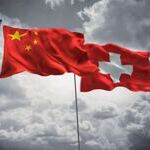
Switzerland and China are once again demonstrating that international relations rarely fit neatly into categories of friend or rival. In August, Bern and Beijing concluded negotiations to modernise their free-trade agreement, opening the prospect of duty-free access to the Chinese market for 99.8 per cent of Switzerland’s current exports. At the same time, political dialogue continues on questions ranging from international security and scientific cooperation to human rights.
The message is unmistakable: despite an increasingly fragmented global order, Switzerland does not intend to disengage from China.
That choice is economically understandable. China is Switzerland’s third-largest trading partner after the European Union and the United States, and bilateral trade has expanded considerably over the past decade. Swiss pharmaceuticals, chemicals, precision instruments and watches have important markets in China, while Chinese goods and investment are increasingly integrated into the Swiss economy. The upgraded free-trade agreement therefore offers Swiss companies greater market access at a time when global trade is becoming more uncertain.
Yet the economic argument is only one part of the story.
China’s transformation into a technological and industrial powerhouse is also creating new competitive pressures for Swiss companies. Chinese firms are no longer simply suppliers of low-cost manufactured goods; in sectors such as electric vehicles, batteries, advanced technology and increasingly sophisticated industrial production, they are competing directly with established European businesses. Swiss economists have recently highlighted this changing competitive
landscape.
For Switzerland, therefore, greater access to the Chinese market can bring opportunity, but it does not eliminate the need for economic resilience.
This is where Bern’s approach becomes particularly important. Switzerland has continued to engage Beijing while simultaneously broadening its relationships across Asia. Its Asia G20 Strategy 2025–28 places China alongside India, Japan, South Korea and Indonesia, reflecting an effort to avoid viewing Swiss interests through a single bilateral relationship. The strategy also recognises that economic cooperation with China exists alongside disagreements over human rights, security and the rules governing international affairs.
The political relationship consequently requires a degree of diplomatic discipline.
In June, Swiss and Chinese officials again emphasised the value of maintaining open channels of communication amid growing geopolitical tensions. In doing so, Bern reiterated its view that dialogue with major powers remains important for stability and respect for international law. Switzerland has also continued to raise human-rights concerns in its bilateral relationship with Beijing.
That combination—engagement without silence—is likely to remain the central challenge.
The upgraded trade agreement itself illustrates the complexity. The original 2014 agreement already gave Chinese imports into Switzerland broad duty-free access, while only around half of Swiss exports to China received the same treatment. The new arrangement seeks to correct much of that imbalance, while adding provisions on environmental protection, labour rights, digital trade, services, investment and competition.
The agreement is therefore more than a tariff reduction. It is an attempt to update an economic
relationship that was designed for a very different international environment.
But implementation will matter as much as the text.
The agreement still has to undergo legal review, followed by signature and domestic approval procedures. The Swiss government has said it aims for signature before the end of 2026. The real test will come afterward: whether expanded market access produces tangible opportunities for Swiss companies, whether investors encounter greater predictability, and whether the new provisions on sustainability and labour rights have practical significance.
There is also a broader strategic question for Switzerland.
As a relatively small, highly open economy, Switzerland benefits enormously from international trade. It also has an interest in maintaining relations with major powers. But openness inevitably creates exposure. Economic dependence, technological competition, supply-chain vulnerabilities and geopolitical tensions cannot be addressed simply through additional trade agreements.
The answer need not be isolation. Nor does engagement require overlooking disagreements.
Switzerland’s traditional diplomatic instinct has been to keep channels open—even when relations between larger powers become increasingly confrontational. The continuation of political dialogue with Beijing reflects that tradition. The challenge is to ensure that dialogue remains reciprocal, commercially meaningful and consistent with Switzerland’s stated commitment to international law and human rights.
The next phase of Swiss-Chinese relations will therefore be less about choosing between cooperation and caution than about managing both simultaneously.
For Beijing, Switzerland represents a sophisticated European economy, a financial centre and a country with a
long tradition of diplomatic engagement. For Bern, China represents a major market, an important global power and an increasingly formidable technological competitor.
Neither side can ignore the other.
The updated free-trade agreement may deepen their economic relationship, but it should not be mistaken for the disappearance of political differences. If anything, closer economic ties make careful diplomacy more important.
Switzerland’s China policy will ultimately be judged not by how close or distant it stands from Beijing, but by whether it can protect its economic interests while maintaining the independence of its foreign policy.
In an increasingly divided world, that balance may prove to be Switzerland’s most valuable diplomatic asset.
We would also like to draw your attention to our upcoming SCCC Business Delegation to East China. The delegation will provide an opportunity to explore business opportunities, strengthen connections with local partners, and gain first-hand insights into the economic landscape of East China. Further information on the program and participation will be available on our website.
Another highlight towards the end of the year is the Swiss–Chinese Life Sciences Forum, taking place on 28 October 2026 at EY in Zurich. The forum will provide strategic market insights, showcase emerging collaboration opportunities, and discuss the practical aspects of successful cross-border partnerships. Secure your seat for an insightful morning of discussion and networking.
We wish you all a pleasant October. Our next newsletter
will be released in early November.
Kind regards,
Swiss-Chinese Chamber of Commerce
|